

JUMP TO :
JUMP TO :
Emergency Fund in India: How Much to Save (3, 6, or 12 Months?)
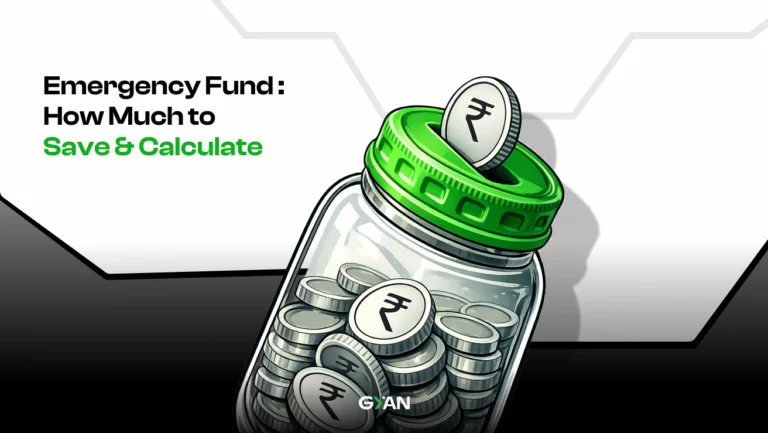
Quick Answer: Save 3–6 months of essential expenses as your emergency fund. If your income is unstable — freelancer, business owner, or self-employed — aim for 9–12 months. Keep it in a savings account or liquid mutual fund for instant access.
An emergency fund is a financial safety net that helps to handle unexpected expenses such as job loss, medical cost ot travel expenses without any stress or debt. In India, most experts suggest saving at least 3–6 months of your monthly expenses, and up to 9–12 months if your income is unstable. The goal is to stay financially secure while maintaining liquidity and easy access to your money.
An emergency fund is one of the most important steps toward financial stability in India. The amount you need depends on your lifestyle, income stability, and responsibilities. In this blog, you will get complete clarity on what an emergency fund is, how much you should save in India, and a simple way to calculate the right amount based on your needs.
What is an Emergency Fund?
An emergency fund is money set aside to handle unexpected expenses like loss of income, medical emergencies, or urgent repairs. It helps to manage financial expenses without taking loans or using credit cards. Experts suggest to save 3 to 6 months of essential expenses as an emergency fund in safe and easily accessible options like a savings account or liquid fund.
The goal of an Emergency Fund is to give you peace of mind and financial security, while at the same time allowing you to maintain your long-term financial security and achieve long-term financial goals even when experiencing unexpected events. This fund acts as a financial backup and helps you stay prepared for life’s unexpected challenges.
How to Calculate Emergency Fund?
To calculate your emergency fund, first add up all your essential monthly expenses such as rent, groceries, EMIs, bills, and medical costs. Then multiply this amount by the number of months you want to stay financially secure, usually 3, 6, or 9 months. The final amount is the emergency fund you should aim to build.
The simplest way to calculate an emergency fund is by focusing only on essential living expenses, not your total salary or lifestyle spends. This method helps you create a realistic financial safety net for unexpected situations like job loss, medical emergencies, or sudden income disruption.
The easiest way to calculate your emergency fund is:
Formula
Monthly Essential Expenses × Number of Months = Emergency FundLet’s say your monthly essential expenses are = ₹30,000
Now multiply this by the number of months:
3 Months
₹90,000
Minimum
6 Months
₹1,80,000
Ideal
9 Months
₹2,70,000
Secure
12 Months
₹3,60,000
High Risk
Instead of guessing, calculate your exact emergency fund requirement using our Emergency Fund Calculator
Emergency Fund Calculator
Enter your monthly essential expenses and employment type to get your target amount.
Recommended Months
—
Target Fund
—
Save Monthly (20%)
—
Why is an Emergency Fund Important in India?
An emergency fund helps face any uncertain events due to the availability of funds. The following are the reasons why an emergency fund is important:
Job Loss: Facing unemployment due to layoffs or business closures is a major financial crisis, but an emergency fund might help overcome the situation. As per data from “India’s Money Habits” it was found that 1 out of 4 Indians cannot last even a month if they lose their job.
Medical Emergency: If a medical emergency occurs and requires you to incur hospital bills, even after you’ve paid your insurance costs, a medical emergency fund is a good way to be prepared to cover the expense of paying bills.
Family Expenses: In many Indian households, unexpected expenses related to the family can occur at any time, such as providing financial assistance to parents or other relatives and funding educational expenses.
As per reports, it is known that Indians consider their parents or friends as an emergency fund. One out of three has neither an emergency fund nor health insurance.
Unexpected Travel: Expenses incurring due to work or sudden relocation can all be covered using an emergency fund.
Home Repairs: These funds are very useful to meet home repairs such as electrical and plumbing issues, broken appliances, etc.
At least 75% of Indians do not have an emergency fund revealed by a survey by a personal finance platform.
How Much Emergency Fund Should You Have in India? (3-Month, 6-Month, 12-Month Model)
The right amount of emergency fund in India depends on your income stability and family responsibilities. Most experts recommend 3–6 months, 9–12 months for unstable income. There is no ‘one-size-fits-all’ approach to how much you should set aside in savings. It is always recommended to save 3 to 6 months of essential expenses as an emergency fund.
To decide how much emergency fund you should have, start by calculating your essential monthly expenses like rent, food, EMIs, and utilities. Multiply this amount by 3, 6, or even 12 months based on your risk level and job security. Always keep this money in safe and liquid options so it is easily accessible when needed.
What is the 3-6-9 Rule of Emergency Fund?
The 3-6-9 rule of an emergency fund is a simple way to decide how much money you should save for financial emergencies.
It suggests keeping:
3 months of expenses as the minimum
6 months as the ideal amount
9 to 12 months for higher financial security, especially if your income is unstable
This rule helps you stay prepared for situations like job loss, medical emergencies, or sudden income disruptions.
3
Months
Stable Jobs
A salaried individual, a government employee or anyone holding a long-term corporate position and receiving regular salary earnings can have a 3-month fund to face unforeseen medical issues and financial crises.
6
Months
Mild Risk Jobs
A 6-month emergency fund is ideal for most families, especially if you have EMIs, dependents, or regular household expenses and for those who are unemployed. The 6-months fund will provide you time to find a new job and to pay your monthly rent or fulfill family obligations if your income declines.
12
Months
High Risk / Self-Employed
Individuals who are self-employed, freelancers, or business owners have irregular or inconsistent incomes. A 12-month emergency fund will help them support their financial decisions without borrowing money.
Emergency Fund: Percentage of Salary
An emergency fund should be calculated based on your monthly essential expenses, not as a fixed percentage of your salary. However, a good way to build it is by saving 10–20% of your monthly salary regularly. Keep saving this amount until you reach at least 3–6 months of living expenses.
While salary helps decide how much you can save every month, the actual emergency fund target should always be expense-based. Start by calculating your monthly essentials such as rent, EMIs, groceries, bills, and medical costs, then multiply that by 3, 6, or even 9–12 months depending on your income stability. Saving 10–20% of your salary every month is a practical and disciplined approach to reach this goal steadily without putting too much pressure on your finances.
For example:
If you earn ₹50,000 a month, setting aside ₹5,000 to ₹10,000 regularly can help you build the fund steadily. Once your emergency corpus is ready, you can redirect this percentage toward other financial goals like investments or savings. The key is to make the contribution consistent and base the final target on your living expenses rather than income alone.
Where to Keep Emergency Fund in India (Safe Options)
You should keep your emergency fund in places that are safe, liquid, and easy to access at any time. The best options in India include savings accounts, sweep-in fixed deposits, and liquid mutual funds. A mix of two options (like savings + liquid fund) gives both safety and slightly better returns.
🏦
High Interest Savings Account
Highly liquid and can be accessed at any time. Higher interest than a traditional savings account. Safe with little to no risk.
✔ Instant access, no risk
✗ Interest rates may change; lower than long-term investments
📈
Sweep-in FDs
Higher interest with easy access and automatically transfers into savings. Safe and reliable.
✔ Better returns, reliable
✗ Some banks may delay access; early withdrawal loses interest
💵
Cash-in-Hand
Can access money immediately in urgent medical situations or emergencies. Can be used if other payment options are not working.
✔ Immediate access
✗ No interest earned; risk of theft or overspending
Emergency Fund for Different Situations
The ideal emergency fund amount depends on your life stage, income stability, and financial responsibilities. There is no one-size-fits-all amount, as different situations require different levels of safety. Students may need a smaller fund, while salaried professionals and freelancers should aim for a larger financial cushion.
🎓
Students
1–3 Months
Students can start with an emergency fund that covers 1–3 months of basic expenses such as food, transport, books, and medical costs. Since most students may not have major financial commitments, a smaller fund is usually enough.
💼
Salaried Professionals
3–6 Months
For salaried individuals with a stable monthly income, keeping 3–6 months of essential expenses is ideal. This helps cover sudden job loss, medical emergencies, or unexpected family expenses.
🏢
Freelancers / Self-Employed
9–12 Months
Freelancers and business owners should maintain 9–12 months of expenses because their income may not be fixed every month. A larger emergency fund offers better security during periods of low income or delayed payments.
How to Build Your Emergency Fund (Step-by-Step)?
Building an emergency fund starts with setting a clear savings goal based on your essential monthly expenses. Save a fixed amount regularly in a separate, easily accessible account and make it a monthly habit. Keep adding to it consistently until you have enough to cover unexpected situations such as job loss, medical needs, or urgent expenses.
1
Calculate Monthly Expenses
List the major expenses that need to be paid each month (e.g., Rent/Mortgage (EMI), Food, Utilities, Insurance, Transportation). By calculating the major costs, you will know what your baseline is for an emergency fund.
2
Choose Your Emergency Fund Goal
3-6 months of your monthly expenses is ideal for most people, but if you have a volatile income, then consider targeting 9-12 months of expenses.
3
Start with a small amount (₹500–₹2,000)
If money is tight, begin by saving ₹500 - ₹2,000 every month. It's not about how much you save, but forming the habit of saving.
4
Right Place of Saving
Always use safe and liquid savings products like a High-Interest Savings Account or FD so that you can access your funds anytime.
5
Automate your monthly savings
Set up Automatic Transfer of funds after you get paid so that you do not spend your savings.
6
Cut Expenses
Decreasing food delivery, subscription, impulse purchases (and other small expenses) will free up funds to put towards your emergency fund.
7
Increase contribution annually
When you receive a raise and/or bonuses, be sure to contribute additional funds toward your emergency fund.
8
Track and Adjust
When you receive a hike or bonus, be sure to track and save your money toward your emergency fund.
Emergency Fund vs Savings Account: What’s the Difference?
Find below the difference between emergency fund and savings in the form of a table:
| Factor | Emergency Fund | Regular Savings |
|---|---|---|
| Purpose | Created for unexpected situations | For planned expenses such as travel, gadgets or future purchases |
| Usage | Can be used during emergencies such as medical issues or job loss | Can be used without any restrictions |
| Accessibility | Instant access as they are kept in highly liquid accounts | Can be stored in RD, FD or savings accounts |
| Amount Needed | 3–6 months of expenses | Flexible based on goals |
| Risk Level | Low-risk and stable options | Includes moderate risk depending on goals |
7 Common Mistakes to Avoid When Building an Emergency Fund
Below are some common mistakes people make with emergency funds. Take a look.
01
Saving Less
Many people don't save as much as they should. That’s why the emergency fund should be large enough to cover three to twelve months' expenses.
02
Investing Emergency Money in the Stock Market
The stock market is volatile and will decrease the value of your savings, especially at the times they are most likely needed. The emergency fund should consist only of safe and liquid investments.
03
Keeping too much Cash
Keeping too much cash at home is unsafe and will decrease in value due to inflation.
04
Using Credit Cards
While using debt may help in an emergency situation, using credit cards as an emergency fund increases financial burden and taxes on your ability to repay loans or pay back the debt.
05
Failing to Adjust Funds for Inflation
As living costs rise over time, so too should the emergency fund amount.
06
Combining Emergency Savings with Regular Spendings
When you put all your savings in one account, people tend to use the emergency fund for non-essentials.
07
Irregular Savings
Saving only when you can is less effective than saving on a monthly basis.
Key Takeaways
An emergency fund is one of the best ways of achieving financial security and should ideally cover at least 3–6 months of essential expenses. If your income is unstable, such as in freelancing or business, it is better to keep 9–12 months of expenses saved for added security. Always keep this money in liquid and easily accessible options like a savings account or liquid fund so you can use it immediately when needed. Avoid putting your emergency fund in risky investments, as the goal is safety and quick access, not high returns.
The benefits of an emergency fund are for providing both emotional and financial support. Having a financial cushion such as cash savings will help experience a lower level of anxiety and fear during unexpected financial circumstances. It will reduce the need to rely on credit cards, high-interest loans, and borrowings. Start with a small amount, practice discipline and allow your emergency fund to create a strong financial foundation.

Frequently Asked Questions (FAQs)
Recommended posts



Related Content



Millionaire Mind Intensive is about unlocking your financial freedom and strengthening your relationship with money.
Quick Links
Contact Info
Success Gyan India LLP
S5, Thiru Vi Ka Industrial Estate,
Guindy, Chennai – 600032