

How do you organize monthly expenses effectively?
The best way to organize monthly expenses is by dividing money into maintenance, lifestyle, growth and wealth-building categories. This improves spending awareness, reduces financial leakage, increases savings consistency and helps build long-term financial freedom.
Most people believe financial stress comes from not earning enough. But for a growing number of professionals today, that explanation no longer fully holds up.
The income is decent. The career is stable. The lifestyle appears successful from the outside.
Yet underneath, there is often a quieter reality:
- Increasing monthly obligations
- Inconsistent savings
- Financial fatigue
- Low investment discipline
- Growing dependence on active income
And perhaps most concerning of all: the realization that years of hard work have not translated into meaningful financial freedom.
This is the modern wealth paradox.
According to multiple global wealth and consumer spending studies, higher income no longer guarantees long-term financial security the way it once did.
Rising lifestyle costs, inflation, debt dependency, and uncontrolled recurring expenses have quietly changed the financial equation for millions of households.
People are earning more. But many are retaining less.
Not because they are irresponsible. But because most people were taught how to earn money, not how to structure it, protect it or multiply it.
And that distinction changes everything. Because financial stability is not created through income alone. It is created through:
- Cash flow systems
- Money management habits
- Expense allocation
- Investing discipline
- Long-term thinking
- Behavioral consistency
This is why learning how to organize monthly expenses is no longer just a budgeting skill. It is a wealth-building skill.
Done correctly, monthly expense management becomes the foundation of:
- Financial resilience
- Long-term investing
- Reduced stress
- Better decision-making
- And eventually, financial freedom
In this guide, we’ll explore how to organize monthly expenses effectively, how to save money consistently without feeling restricted, how to develop a wealth-building mindset and how to stop unconsciously financing a lifestyle that delays your future freedom.
Why Most Monthly Budgeting Systems Fail?
Most monthly budgeting systems fail because they depend too heavily on discipline, manual expense tracking and unrealistic spending restrictions. When budgeting feels stressful or overly controlling, people experience decision fatigue, emotional guilt and eventually stop following the system altogether.
The best monthly expense systems are simple, automated, flexible and designed around real human behavior, not financial perfection.
Traditional financial advice often sounds like this:
- Spend less
- Stop eating out
- Avoid unnecessary purchases
- Save more aggressively
But this approach misunderstands something fundamental: human beings are emotional spenders before they are rational planners.
Behavioral finance research consistently shows that spending decisions are heavily influenced by:
- Stress and convenience
- Emotional reward
- Social comparison
- Identity and fatigue
- Lifestyle normalization
This explains why even financially intelligent people often struggle with money management despite understanding basic budgeting principles.
The issue is rarely knowledge. The issue is structure.
Most households operate reactively:
- Income enters
- Expenses happen automatically
- Savings become optional
- Investments happen if money is left
That sequence almost guarantees weak wealth accumulation over time.
Financially organized individuals reverse the sequence entirely. They decide where money should go before the month begins.
And that one behavioral shift changes financial outcomes dramatically over decades.
The Hidden Wealth Killer: Lifestyle Inflation
Lifestyle inflation is one of the biggest reasons people struggle to build wealth despite earning more money. As income rises, spending often rises with it through larger EMIs, luxury upgrades, dining, travel and convenience spending.
Over time, these recurring lifestyle costs reduce savings, delay investing, and quietly increase financial dependency instead of long-term financial freedom.
India’s retail inflation remained around 3.5–4% in 2026, while housing, transport, healthcare, and lifestyle costs continued rising steadily, increasing financial pressure even for higher-income households.
Government household expenditure data also shows spending on non-food lifestyle categories such as transport, entertainment, and convenience services has steadily increased across urban households in recent years.
What Is Lifestyle Inflation?
Lifestyle inflation happens when spending increases automatically alongside income growth, reducing long-term savings and investment potential despite earning more money.
This is one of the biggest reasons many high earners still feel financially stuck.
As salaries rise, people unconsciously upgrade:
- Homes and cars
- Vacations
- Dining habits
- Convenience spending
- Subscriptions
- Luxury purchases
Individually, these upgrades feel justified. Collectively, they create long-term financial pressure. Consider this example:
A professional earning ₹80,000 monthly gets promoted over several years and eventually earns ₹2.5 lakh monthly. But simultaneously:
- rent increases from ₹22k to ₹65k
- car EMI rises to ₹38k
- international vacations become annual
- premium memberships accumulate
- dining and convenience spending doubles
Five years later, income tripled. But investments barely grew. And this is how high income quietly becomes high maintenance.
Adding On, Psychologically, lifestyle inflation becomes dangerous because upgraded living standards normalize extremely fast. What once felt luxurious begins feeling necessary.
This creates a cycle where higher income leads to higher obligations, which leads to continued financial pressure.
Financially disciplined individuals behave differently. They increase assets faster than lifestyle expenses. That principle alone creates enormous long-term wealth separation.
The Wealth Allocation Framework: Smart Way To Organize Monthly Expenses
The Wealth Allocation Framework is a smart monthly expense management system that organizes money based on future financial impact instead of basic spending categories.
It helps balance essential expenses, lifestyle spending, growth investments and wealth-building assets so income supports long-term financial freedom rather than just short-term consumption.
This framework works as a practical money management strategy for salaried professionals trying to improve financial planning and long-term wealth building.
1. Maintenance Expenses
These are the expenses that keep your life running every single month.
If this category becomes too heavy, even a high income starts feeling tight because too much money is already committed before investing begins.
Tracking monthly expenses regularly helps identify recurring financial pressure before it starts affecting long-term savings.
These sustain current life. Examples:
- Housing
- Groceries
- Transportation
- Utilities
- Insurance
- Healthcare
These expenses are necessary. But they do not increase future wealth. The objective here should be efficiency, not emotional attachment.
One of the biggest money management mistakes people make is increasing recurring maintenance costs too aggressively after income growth. Because recurring expenses create recurring pressure.
A larger home loan, expensive car EMI, or high-maintenance lifestyle can quietly reduce investment capacity for years.
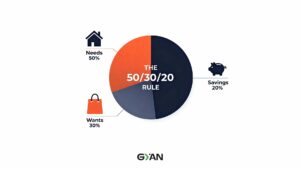
A useful rule: Try to keep fixed essential expenses below 50–55% of monthly income whenever possible. This preserves financial flexibility.
2. Lifestyle Expenses
This category usually grows the fastest after salary increases.
Left unmanaged, it quietly eats investment potential and creates a cycle where higher income still does not translate into financial freedom or wealth growth.
These improve comfort and enjoyment. Examples:
- Vacations
- Dining out
- OTT subscriptions
- Shopping
- Gadgets
- Convenience services
Lifestyle spending is not inherently bad. The problem is unconscious lifestyle spending.
Research from consumer behavior studies consistently shows that people underestimate recurring discretionary expenses while overestimating one-time large purchases.
This means financial leakage usually happens through repetition, not dramatic purchases.
For example:
- ₹700 food deliveries
- Unused subscriptions
- Impulse online shopping
- Convenience spending
- Small recurring upgrades
Individually harmless. Collectively destructive to long-term compounding.
The 24-Hour Purchase Rule: Before making non-essential purchases above a certain amount, wait 24 hours. This simple rule dramatically reduces emotional spending and impulse buying.
3. Growth Expenses
This is the category that increases future earning ability.
The right investments here can improve income, confidence, career opportunities, business growth, decision-making and long-term financial leverage over time.
This is where wealth builders think differently from consumers. Examples:
- Skill development
- Executive coaching
- Fitness
- Networking
- Productivity tools
- Business systems
- Professional learning
Most consumers spend heavily on comfort. Financially successful individuals spend heavily on capability. This distinction compounds enormously over time.
A certification that increases earning power by even 20% annually may generate far greater long-term ROI than years of luxury spending.
This is why many wealthy individuals continue investing in the following long after becoming financially successful:
- Learning
- Health
- Networks
- Systems
- Productivity
Because growth assets increase future cash flow potential.
4. Asset-Building Expenses
This is the category that eventually reduces dependence on monthly salary income.
Over time, these assets begin generating stability, passive income, financial flexibility and long-term wealth compounding independently.
This category determines future financial freedom. Examples:
- SIPs and index funds
- Retirement investing
- Emergency reserves
- Business ownership
- Dividend-generating assets
- Real estate cash flow assets
This category should never receive leftover money. It should receive protected money.
Financially organized households automate these allocations immediately after salary credit.
Because what gets automated gets sustained.
Before moving ahead, take 15 minutes and check what role your money is playing right now.
Open your bank statement or payment app history for the last 30 days. Then divide your spending into these four buckets:
| Money Bucket | What To Add Here |
|---|---|
| Maintenance | Rent, groceries, bills, transport, insurance, healthcare |
| Lifestyle | Dining, shopping, subscriptions, travel, convenience spending |
| Growth | Courses, coaching, books, fitness, networking, skill-building |
| Asset-Building | SIPs, emergency fund, investments, retirement savings, debt repayment |
Now ask yourself:
- Which bucket gets most of my money?
- Which bucket is helping my future?
- Which bucket is silently delaying my financial freedom?
- What is one expense I can reduce this month?
- What is one amount I can move toward growth or asset-building?
This is a simple money method to check because wealth is not only about how much you earn. It is about how consciously you direct your money.
When your money has no clear role, it usually gets absorbed by lifestyle. When every rupee has a purpose, your income starts supporting freedom, stability, and long-term wealth.
Why Delayed Investing Is One of the Costliest Financial Mistakes
Delayed investing is costly because compounding works best with time. Waiting to invest reduces long-term wealth potential, even for high earners. Starting early with consistent investments allows money to grow exponentially over decades through compounding, automation and long-term market growth.
Most people delay investing because they believe they need:
- Higher income
- Fewer responsibilities
- The perfect time
- More stability
But delayed investing quietly destroys compounding potential.
Systematic Investment Plan contributions in India crossed record levels above ₹31,000 crore monthly in 2026, showing that long-term disciplined investing continues to grow despite market volatility and economic uncertainty.
The Real Power of Compounding
If someone invests:
| Monthly Investment | Annual Growth Assumption | Time Period | Potential Long-Term Value |
|---|---|---|---|
| ₹25,000 monthly | 12% annual growth | 20 years | Can potentially grow beyond ₹2.5 crore |
Importantly, the majority of that growth comes from compounding, not from the invested principal alone.
This is why time matters more than intensity initially. The financially strongest individuals prioritize consistency, automation, patience and long-term investing behavior. Not short-term market timing.
The financially strongest individuals prioritize consistency, automation, patience and long-term investing behavior. Not short-term market timing.
Why High Earners Still Struggle To Save Money and Build Wealth
Many high earners still struggle financially because higher income often leads to higher recurring expenses, lifestyle inflation, delayed investing and poor cash flow allocation. Without intentional money management and wealth-building systems, increased earnings can create more financial obligations instead of long-term assets, savings and financial freedom.
According to RBI-linked household savings data, India’s household financial savings fell sharply from nearly 11% of GDP in FY21 to around 5.3% in FY24, highlighting how rising expenses and liabilities are reducing long-term savings capacity despite income growth.
One of the fastest-growing financial demographics globally is high-income financially stressed professionals.
These are people earning well, yet feeling trapped financially.
This happens because:
- Income masks inefficiency
- Cash flow hides poor allocation
- Lifestyle upgrades create silent obligations
- Investing gets delayed
- Wealth-building becomes secondary
A person earning ₹3 lakh monthly but investing little may build less wealth over time than someone earning half as much with disciplined investing habits.
Because wealth is ultimately determined by:
- Asset accumulation
- Investment consistency
- Cash flow resilience
- Liquidity and ownership
This is one of the most important money mindset shifts people must develop.